UNESCO heritage sites of the world.

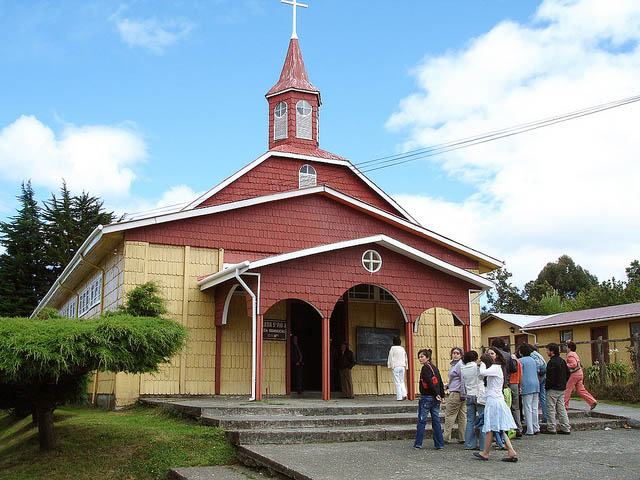
  • Churches of Chiloe

    The Churches of Chiloe represent a unique example in Latin America of an outstanding form of ecclesiastical wooden architecture. They represent a tradition initiated by the Jesuit Peripatetic Mission in the 17th and 18th centuries, continued and enriched by the Franciscans during the 19th century and still prevailing today.

  • Upper Svaneti, Georgia

    Preserved by its long isolation, the Upper Svaneti region of the Caucasus is an exceptional example of mountain scenery with medieval-type villages and tower-houses. The village of Chazhashi still has more than 200 of these very unusual houses..........

  • Lord Howe Island Group

    A remarkable example of isolated oceanic islands, born of volcanic activity more than 2,000 m under the sea, these islands boast a spectacular topography and are home to numerous endemic species, especially birds.Located in the South Pacific, 700 km north-east of Sydney, the property is included administratively in New South Wales............

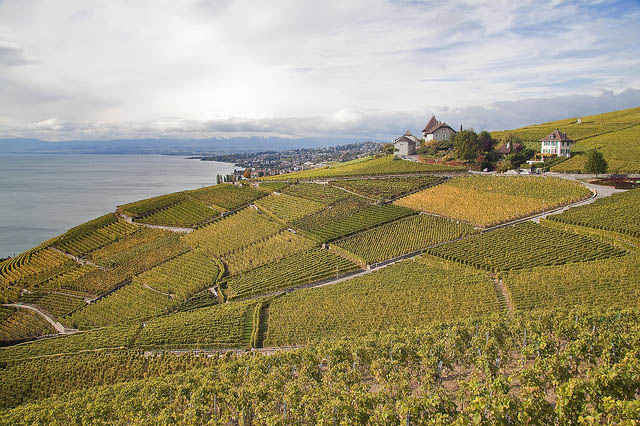
  • Lavaux, Vineyard Terraces

    The Lavaux Vineyard Terraces, stretching for about 30 km along the south-facing northern shores of Lake Geneva from the Chateau de Chillon to the eastern outskirts of Lausanne in the Vaud region, cover the lower slopes of the mountainside between the villages and the lake. Although there is some evidence that vines were grown in the area in Roman times.................

  • Stone Circles of Senegambia

    The site consists of four large groups of stone circles that represent an extraordinary concentration of over 1,000 monuments in a band 100 km wide along some 350 km of the River Gambia. The four groups, Sine Ngayène, Wanar, Wassu and Kerbatch, cover 93 stone circles and numerous tumuli, burial mounds..............

Showing posts with label Africa. Show all posts

Friday, January 20, 2012

Al Qal'a of Beni Hammad

Friday, January 20, 2012 9 Comments so far
In a mountainous site of extraordinary beauty, the ruins of the first capital of the Hammadid emirs, founded in 1007 and demolished in 1152, provide an authentic picture of a fortified Muslim city. The mosque, whose prayer room has 13 aisles with eight bays, is one of the largest in Algeria.

image
Al Qal'a of Beni Hammad

Tuesday, December 20, 2011

Rock-Hewn Churches, Lalibela

Tuesday, December 20, 2011 Your comment is first
image
Rock - Hewn Church   Lalibela, Ethiopia

The 11 medieval monolithic cave churches of this 13th-century 'New Jerusalem' are situated in a mountainous region in the heart of Ethiopia near a traditional village with circular-shaped dwellings. Lalibela is a high place of Ethiopian Christianity, still today a place of pilmigrage and devotion.

The rock-hewn churches of Lalibela are exceptionally fine examples of a long-established Ethiopian building tradition. Monolithic churches are to be found all over the north and the centre of the country. Some of the oldest of such churches are to be found in Tigray, where some are believed to date from around the 6th or 7th centuries. King Lalibela is believed to have commissioned these structures with the purpose of creating a holy and symbolic place which considerably influenced Ethiopian religious beliefs.

Saturday, December 17, 2011

Tassili n'Ajjer

Saturday, December 17, 2011 3 Comments so far
Located in a strange lunar landscape of great geological interest, this site has one of the most important groupings of prehistoric cave art in the world. More than 15,000 drawings and engravings record the climatic changes, the animal migrations and the evolution of human life on the edge of the Sahara from 6000 BC to the first centuries of the present era. The geological formations are of outstanding scenic interest, with eroded sandstones forming 'forests of rock'.

Tassili n'Ajjer is a vast plateau in south-east Algeria at the borders of Libya, Niger and Mali, covering an area of 72,000 sq. km. The exceptional density of paintings and engravings, and the presence of many prehistoric vestiges, are remarkable testimonies to Prehistory. From 10,000 BC to the first centuries of our era, successive peoples left many archaeological remains, habitations, burial mounds and enclosures which have yielded abundant lithic and ceramic material. However, it is the rock art (engravings and paintings) that have made Tassili world famous as from 1933, the date of its discovery. 15,000 engravings have been identified to date.The property is also of great geological and aesthetic interest: the panorama of geological formations with "rock forests" of eroded sandstone resembles a strange lunar landscape.

image
Tassili n'Ajjer, Algeria